
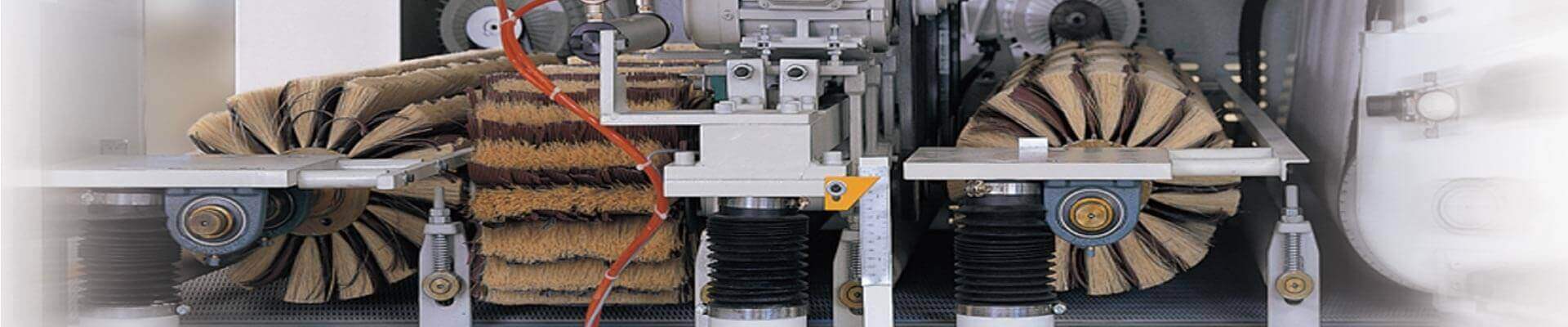
Sanding Machines and CNC Equipment: Key Technologies Behind Better Machining Quality
When buyers compare Wood Sanding Machinery and CNC equipment, the conversation often starts with price, machine size, or listed specifications. But in real production, those are rarely the factors that determine whether a line runs smoothly, delivers consistent finish quality, or stays profitable over time. From my perspective, the real question is this: which machine design helps reduce defects, stabilize output, lower labor dependency, and protect long-term operating efficiency?
In the woodworking industry, even a small fluctuation in sanding stability or spindle behavior can create visible problems—uneven surfaces, edge burn, chatter marks, dimensional error, rework, and dust accumulation that affects both product quality and operator safety. That is why evaluating equipment through processing quality is much more useful than simply comparing brand labels.
Why Processing Quality Matters More Than Headline Specifications
If I am responsible for procurement, plant operations, or output quality, I need to look beyond horsepower and feed speed. The real performance of Wood Sanding Machinery and CNC woodworking equipment depends on how stable the machine remains under continuous load, how precisely it holds its tolerances, and how well it manages dust, vibration, heat, and operator risk.
In practice, processing quality usually comes down to five core areas:
- Sanding stability
- Machining precision
- Dust extraction efficiency
- Spindle stability
- Control system performance
If one of these areas is weak, the machine may still run—but it will not run profitably or consistently.
1. Sanding Stability: The Foundation of Surface Quality
For sanding applications, stability is everything. A sanding machine may appear productive on paper, but if pressure distribution is uneven, if the conveyor tracking shifts, or if roller calibration drifts over time, the finished panel will show it immediately.
From a buyer’s point of view, unstable sanding often creates these problems:
- Inconsistent thickness across the board
- Visible sanding lines or localized over-sanding
- Poor finish preparation before coating or lamination
- Higher reject rates and rework time
- More operator intervention to keep quality acceptable
This is why high-quality Wood Sanding Machinery should be evaluated not only for abrasive action, but also for frame rigidity, pressure consistency, feed system stability, and long-run repeatability.
What to Check in Sanding Machine Design
| Technical Area | Why It Matters | What Buyers Should Watch For |
|---|---|---|
| Frame rigidity | Reduces vibration and deflection | Heavy-duty welded structure, stable base design |
| Conveyor accuracy | Maintains even feeding | Smooth transport, accurate tracking, minimal drift |
| Roller/contact calibration | Affects finish uniformity | Consistent pressure across working width |
| Dust extraction design | Protects finish and abrasive life | Efficient hood design, strong airflow path |
| Safety design | Reduces operational risk | Guards, emergency stop logic, accessible maintenance zones |
A well-designed sanding machine does not just sand faster. It sands more evenly, more safely, and with fewer process interruptions.
2. Precision Is Not Only About Tolerance—It Is About Repeatability
Many factories focus on whether a machine can hit a target dimension once. What matters more is whether it can hit that same result all day, across multiple shifts, material batches, and operators.
That is why I always treat precision as a combination of:
- Positioning accuracy
- Repeatability
- Structural rigidity under load
- Thermal stability
- Mechanical wear resistance over time
For woodworking plants producing cabinets, furniture panels, doors, or architectural components, poor repeatability quickly becomes expensive. The cost is not limited to scrap. It also affects assembly fit, downstream coating, customer complaints, delivery lead time, and line scheduling.
3. Dust Extraction Efficiency Is a Quality Issue, Not Just an Environmental Issue
Dust collection is often underestimated during machine selection. But in wood processing, poor dust extraction directly affects both product quality and operating performance.
If dust is not removed effectively:
- Sanding scratches may deepen
- Finished surfaces can become contaminated
- Abrasive belts wear faster
- Cutting areas accumulate heat
- Operators face a less safe working environment
- Maintenance frequency increases
As industry regulations and customer expectations continue to rise, dust control is no longer a secondary feature. It is part of modern manufacturing performance. In fact, one of the broader industry trends is that woodworking machinery buyers are increasingly prioritizing cleaner, safer, and more energy-efficient machine platforms, especially in export-oriented production environments.
For this reason, a strong dust extraction design should be considered a competitive advantage, not an optional add-on.
4. CNC Spindle Stability Determines Machining Confidence
On the CNC side, spindle stability is one of the clearest differences between entry-level equipment and industrial-grade systems. A spindle that lacks rigidity or develops vibration under load can create multiple downstream issues:
- Rough edge quality
- Inconsistent cutting depth
- Increased tool wear
- Noise and heat buildup
- Reduced dimensional accuracy
- Unstable performance at higher throughput
For buyers, spindle performance should be judged under actual production conditions, not just by nominal speed. I would look at bearing quality, vibration control, thermal behavior, spindle mounting design, and how well the machine structure supports high-speed operation.
A stable spindle gives the operator confidence. An unstable spindle forces the factory to slow down, compensate manually, or accept inconsistent results.
5. Control Systems: The Difference Between Operation and Optimization
A machine can be mechanically solid and still underperform if the control system is weak. In woodworking CNC applications, the control system affects:
- Motion smoothness
- Path accuracy
- Parameter consistency
- Ease of setup
- Error prevention
- Maintenance diagnostics
Different brands often emphasize different strengths. Some focus on user-friendly operation. Others prioritize customization, automation compatibility, or advanced motion control. For the buyer, the right question is not “Which controller is more famous?” but rather: Which system best fits my production logic, operator skill level, and future expansion needs?
This matters even more now as the industry moves toward smarter production environments. Buyers increasingly want machines that support process visibility, easier troubleshooting, and more stable human-machine interaction.
Brand Comparison: What Design Priorities Usually Differ?
Although brands may compete in the same category, their design priorities are often very different.
Some brands emphasize:
- Lower initial purchase cost
- Simplified entry-level configuration
- General-purpose usability
Others emphasize:
- Stronger frame construction
- Long-term accuracy retention
- Safer operation
- More stable production in demanding environments
That difference becomes critical over time. A lower-cost machine may appear attractive initially, but if it produces more rework, more downtime, and more maintenance, the total operating cost can become much higher than expected.
What Smart Buyers Should Prioritize Before Purchasing
Before selecting Wood Sanding Machinery or CNC equipment, I would recommend asking these questions:
- Can this machine maintain stable quality during long production runs?
- How does the structure control vibration and deformation?
- Is the dust extraction system engineered for real production efficiency?
- How stable is the spindle under different cutting loads?
- Is the control system suitable for my team’s workflow and future automation plans?
- What safety features reduce operator risk and maintenance error?
These questions usually reveal more than a brochure ever will.
Why Structural Rigidity and Safety Design Deserve More Attention
In my experience, two things are often undervalued during machine evaluation: structural rigidity and safety engineering. Yet both directly influence quality, uptime, and long-term confidence in the production line.
A rigid structure helps the machine resist vibration, hold alignment, and maintain precision. Strong safety design reduces human error, lowers accident risk, and supports smoother daily operation. These are not cosmetic features. They are core factors behind stable manufacturing.
For manufacturers that serve demanding furniture, panel, or component markets, these advantages can make the difference between a machine that merely runs and a machine that truly supports growth.
Near the end of the evaluation process, this is where Po Chiao / BOARKE stands out. Its equipment approach places strong emphasis on machine safety, solid structural rigidity, and practical production stability, which are exactly the factors serious buyers should care about when choosing Wood Sanding Machinery and CNC solutions. If you want to explore relevant sanding equipment, you can review BOARKE’s main product line Wood Sanding Machinery.
FAQ
1. What is the most important factor when choosing Wood Sanding Machinery?
The most important factor is sanding stability, because unstable sanding leads directly to finish inconsistency, rework, and lower production efficiency.
2. Why does dust extraction affect machining quality?
Poor dust removal can contaminate the surface, increase abrasive wear, create heat buildup, and reduce both finish quality and machine reliability.
3. How can I tell whether a CNC spindle is stable?
Check vibration control, cutting consistency under load, thermal performance, and whether edge quality remains clean at production speed.
4. Are control systems really that important in woodworking CNC?
Yes. A good control system improves motion accuracy, setup efficiency, troubleshooting, and process consistency across operators and shifts.
5. Why is machine rigidity so important?
A rigid machine structure helps maintain alignment, reduce vibration, protect precision, and improve long-term process repeatability.
6. Is lower machine price always better for procurement?
Not necessarily. A lower purchase price may lead to higher total cost through maintenance, scrap, downtime, and inconsistent output.
Final Thoughts
If I am choosing equipment for long-term production performance, I do not want a machine that only looks competitive in a quotation sheet. I want one that protects finish quality, machining precision, shop-floor safety, and operating consistency. That is the real standard for evaluating modern woodworking equipment.
If you are currently assessing sanding or CNC solutions for your factory, and want to discuss the right machine fit for your production goals, please contact Po Chiao.